
12 WAYS TO RECOVER
WITH TAKT
Protect your trades. Maintain the line of balance. Choose the right recovery strategy without pushing people into chaos.
All 12 Strategies
01
Line of Balance Delay Recovery
If you have a delay, you need to protect your trades. Don’t stack or burden successor trades and force them into chaos.
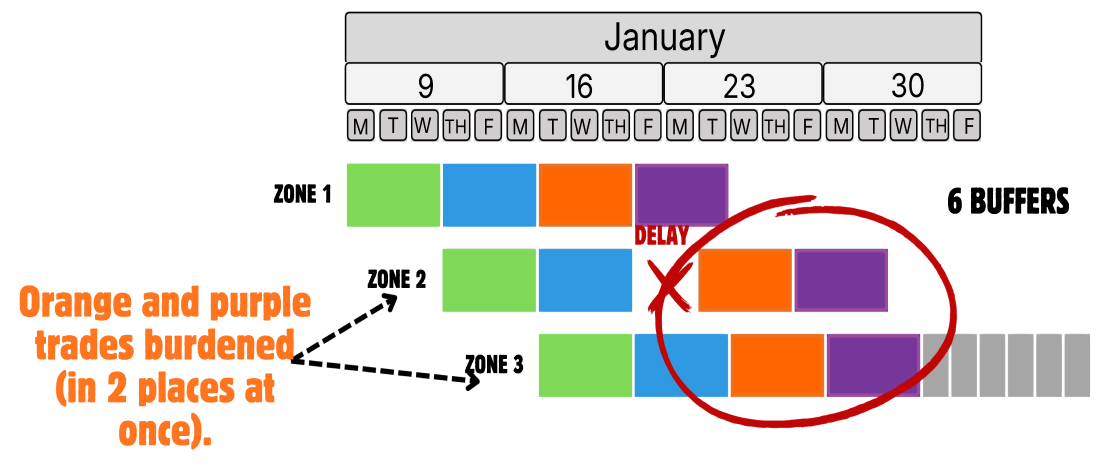
Maintain the line of balance — the visual representation of flow shown against time — and use a buffer. You can switch to workable backlog until the delay is over.
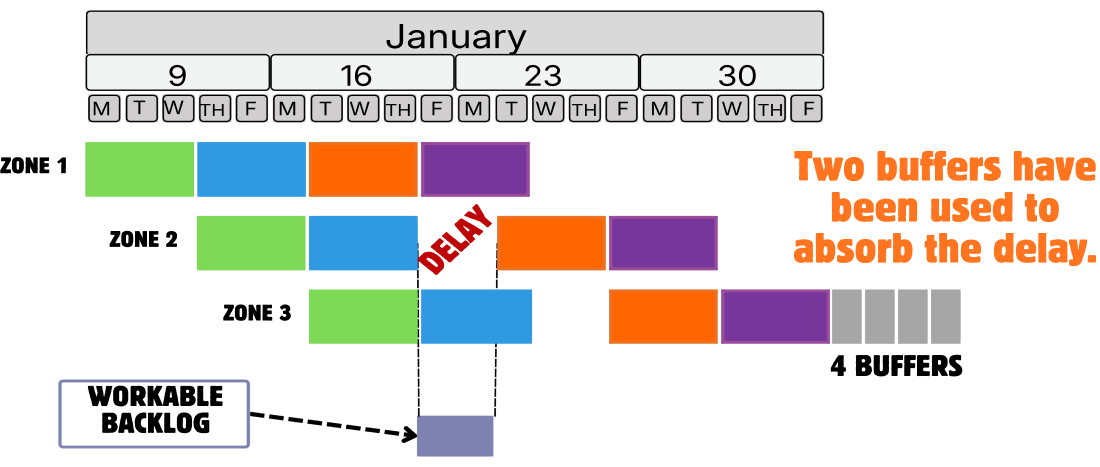
Doing this in the field looks like telling the trades they have a small extension to their deadlines. They can keep working, but their handoffs are not due until a day later. If they cannot keep busy in their area, they are moved to workable backlog.
02
Sequence Delay Recovery
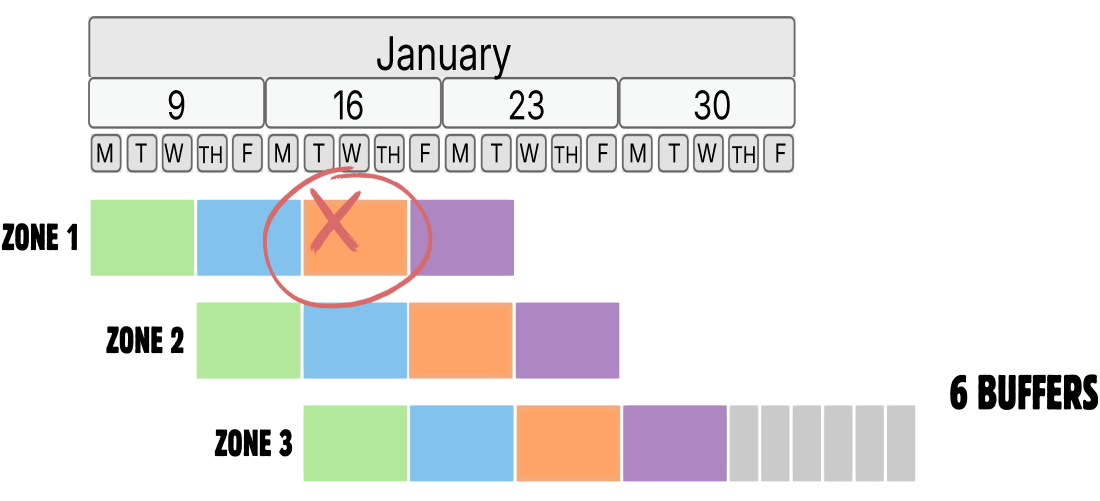
If you have a delay, consider modifying the sequence to absorb it. If you have the materials and the sequence works — try it.
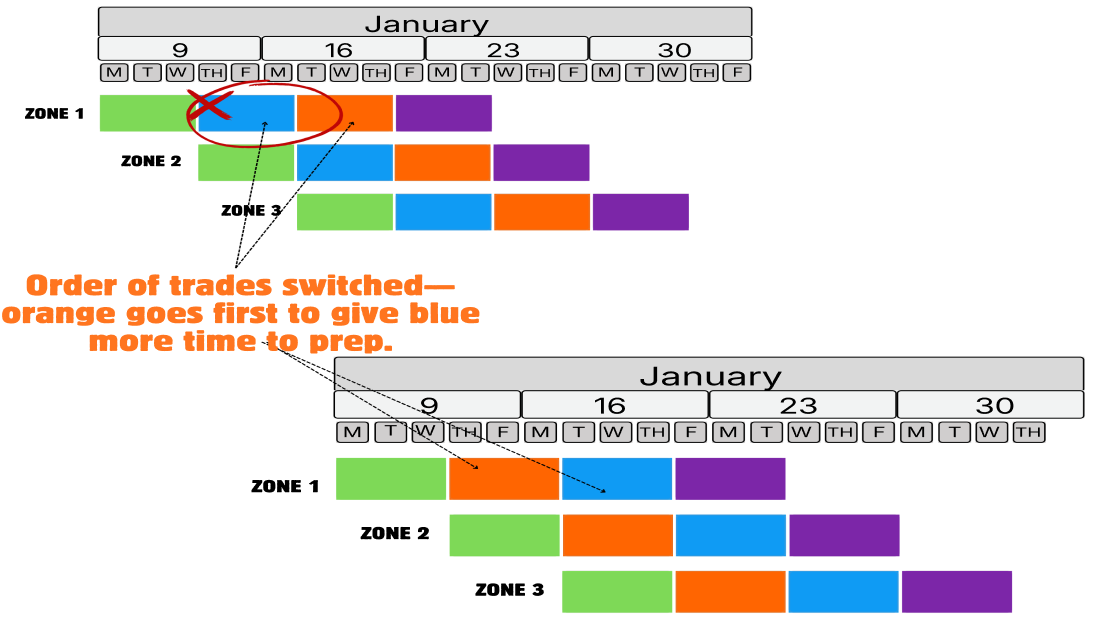
An example of this might be SOG and Level 1 decks. Although concrete professionals hate it, if the underground MEP coordination and overall SOG sequence is holding up the building, many times the contractor will go up with columns, walls, and decks — and then come back later for the SOG.
03
Isolation Delay Recovery
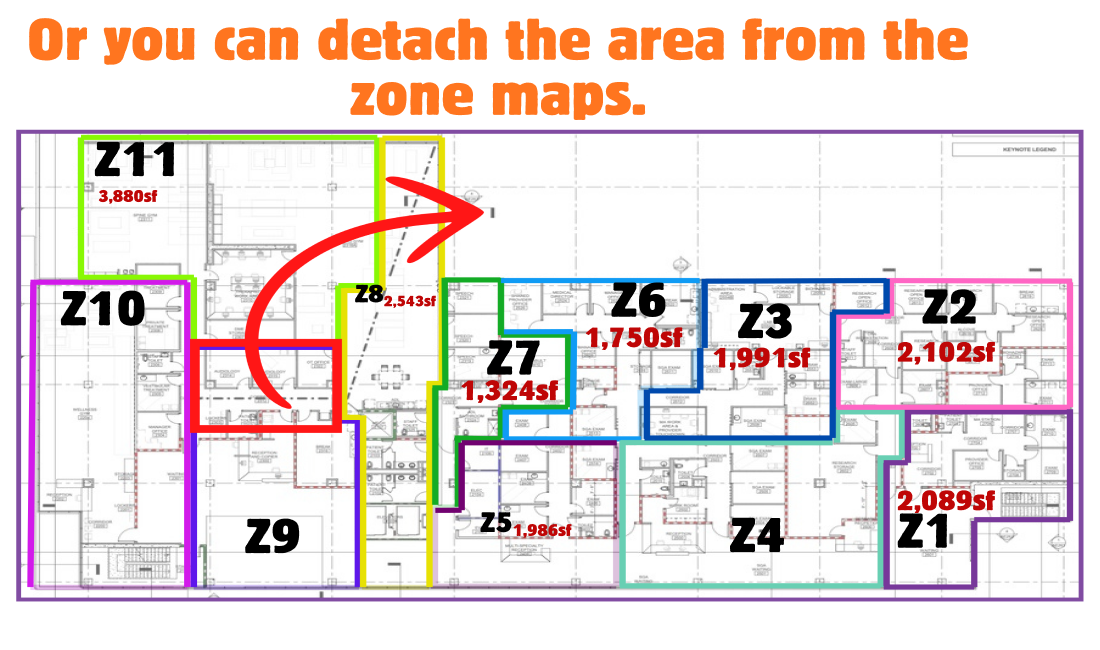
If you have a delay you can detach the Takt wagon to recover — remove it and keep the main train going.
If the wagon can flexibly be moved past the handoff and not affect the successor or be removed from the train entirely, we can remove it and keep the main train going.
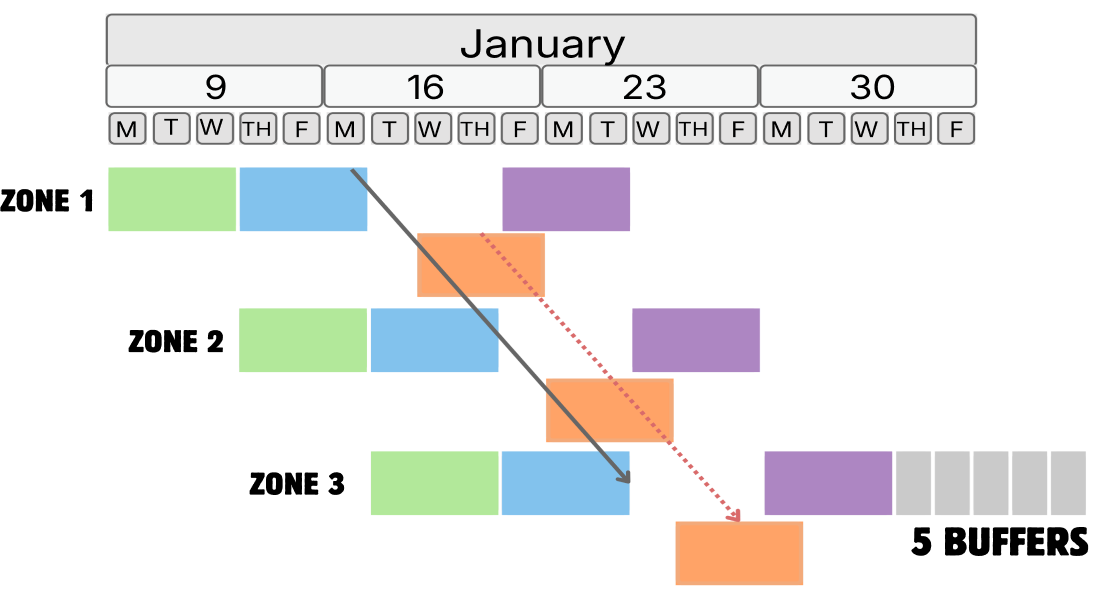
You would mark this on the zone maps, isolate it from the main train flow, and schedule it another way either on the Takt plan, with a pull plan, or place the activity on a Scrum board.
04
Utilize Experts to Recover
Although it’s not my first or favorite option, you can recover a delay by adding the work of another trained and onboarded crew. The crew would need to be a highly productive and proven crew— not a B Team of non-performers.
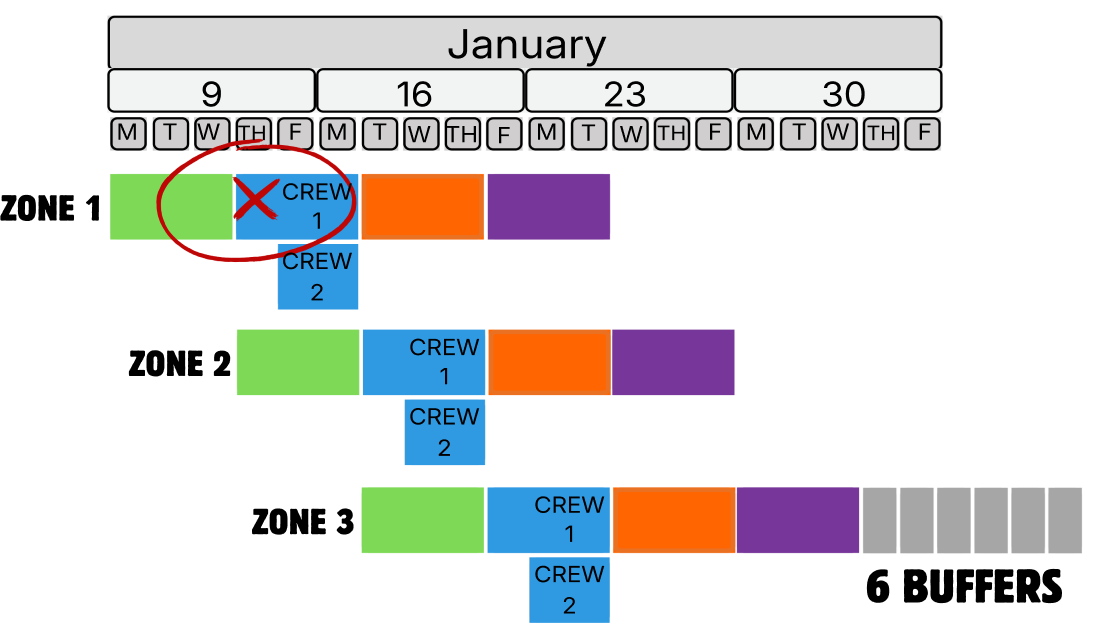
You can also use the swing capacity of another crew that is in a workable backlog area.

Workable backlog is work that is ready elsewhere on the project but is not on the path of critical flow. Therefore, it can be used to move workers to and from it — which creates swing capacity.
05
Rezoning Recovery
If you have a delay, you can rezone the successor activities to pull the plan back in.
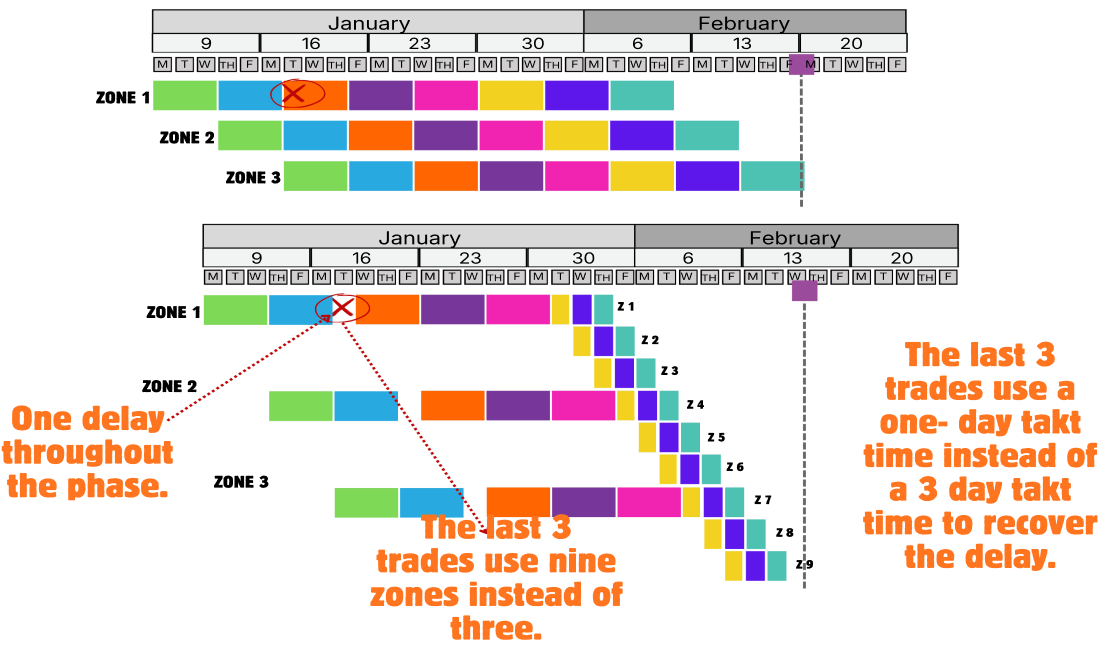
We prefer to prevent the delay—swarm and fix it—but if we can’t, we need to absorb it in the right way so we do not enter into a downward productivity spiral.
06
DESIGN TO THE WORK PACKAGE
If you have a complex or long activity in your logic that needs to shorten in order to release successor work
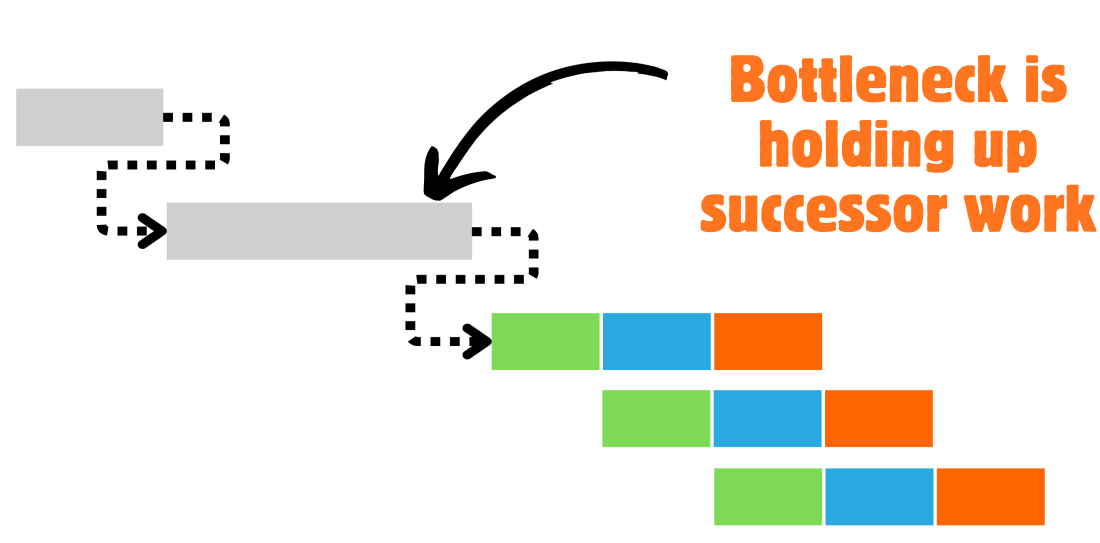
You can adjust the design, change equipment types, refine the install, or pre-fabricate the work for the activity to shorten it without rushing, pushing, and panicking workers.
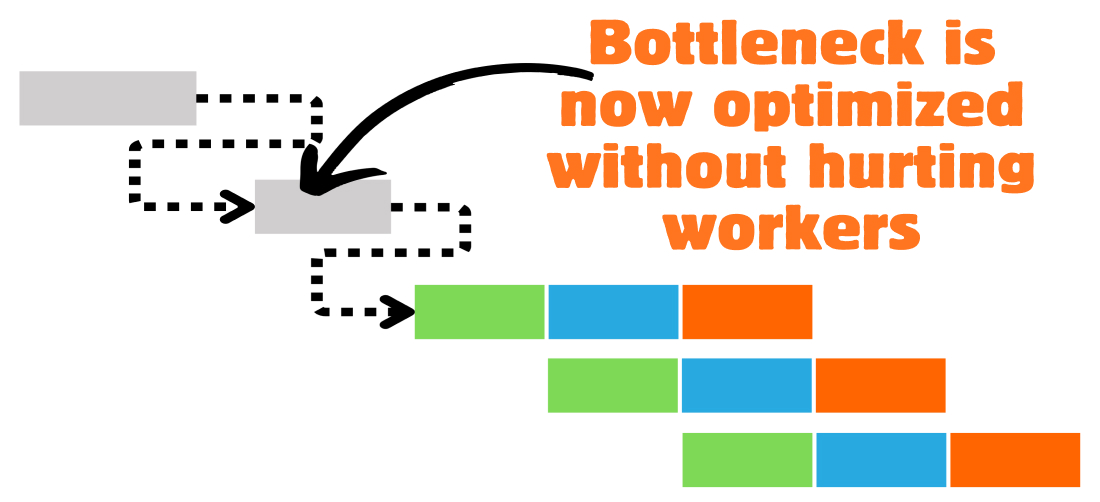
The industry teaches professionals to build what is designed. Lean construction takes a different approach. We should design and prepare to support the client and the installation
07
IDENTIFY & REMOVE TRADE BOTTLENECKS
A Trade Bottleneck is where a task or Wagon does not pace with the others, causing gaps in efficiency. This bottleneck will become the pace of your Train of Trades. If you’ve read The Goal, by Eliyahu Goldratt, this is the concept of the slowest hiker setting the pace.
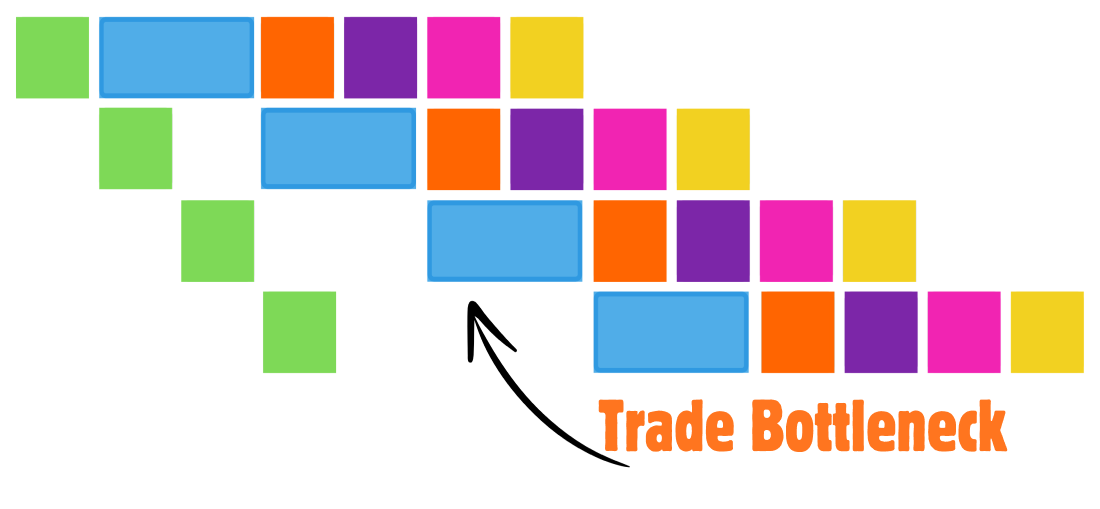
Trade Bottleneck Solutions (instead of using buffers):
- Adjust the work package and crew composition.
- Improve training of workers and shorten the in-zone cycle time.
- Respond quickly with all communication. Go on high alert.
- Consider task force meetings with them to help out.
- Prioritize their problems in all meetings.
- Help with needed resources that are appropriate.
- Make sure they are first up for logistics.
- Really focus on full kit for your Trade bottleneck.
Their success is the success of the entire team. Swarm them with support and ideas to help them get on track. Don’t leave them alone or try and force them to into solutions that put people in danger. They are your responsibility. They are in your care. Respect people first.
And yes, you can add another crew or people to speed them up, as long as they are fully planned, trained, and onboarded crews or people.
08
DENTIFY & REMOVE ZONE BOTTLENECKS
A Zone Bottleneck is where a zone in the path of work is too complex and slows down the work of the Train of Trades. The checklist below offers some solutions for each of these bottlenecks. If you are able to fix a bottleneck, do so, so you don’t have to use buffers.
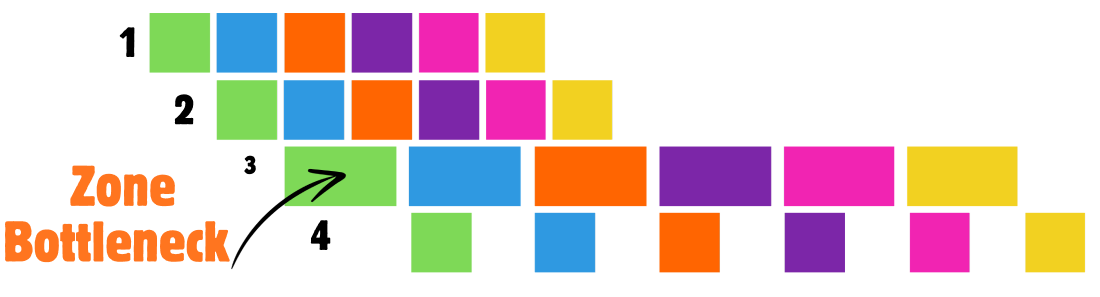
Zone Bottleneck Solutions (instead of using buffers):
- Adjust the zone size.
- Improve access to zone.
- Make zone expectations more clear.
- Organize it to create flow.
- Improve the quality of layout in the zone.
- Improve visual systems in the zone.
- Improve lighting and environment.
- Build in quality with visual indicators.
Make sure you have gone to the zone, walked the area and truly understand how the work is flowing. If you haven’t been there, you can’t improve the situation with theories.
09
PHASE SEQUENCING CONSTRAINTTO START
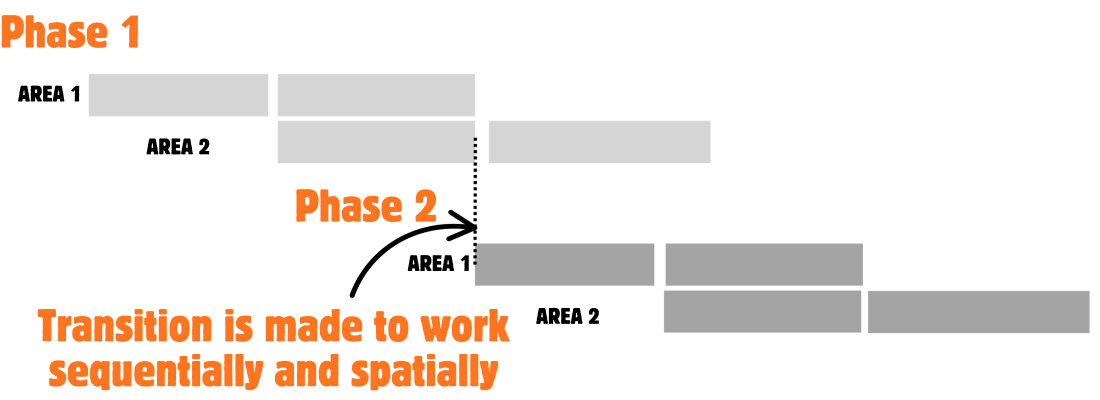
Many times a contractor or trade will assume longer durations and not break up work areas to make the work move faster…

Once the team breaks down the work, it must be synchronized and aligned to successor work in the right order. Many times concrete is planned in one direction and steel in another…

And that will only slow us down. We need to work from the end forward and move all phases in the same direction.
10
OVERALL SEQUENCING STRATEGIES
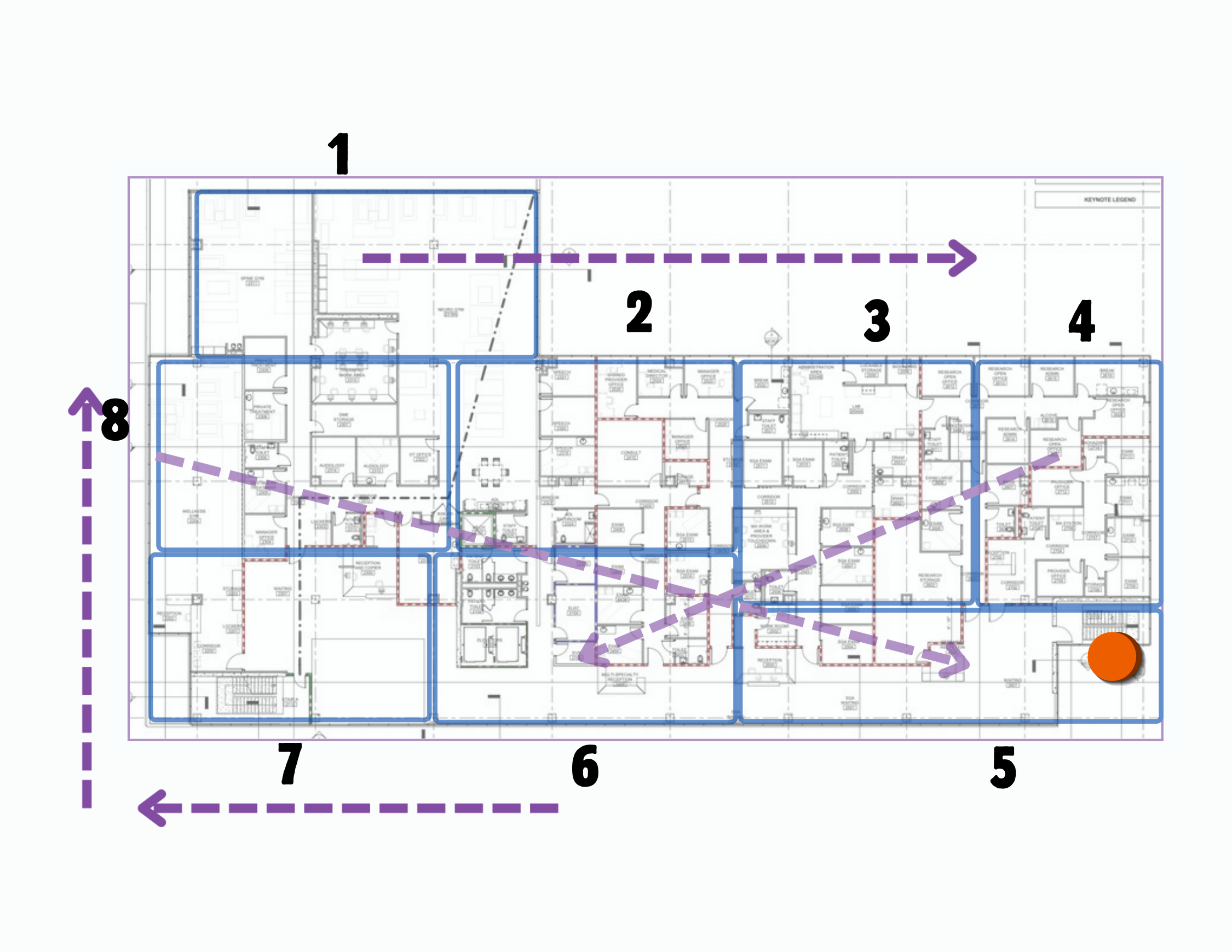
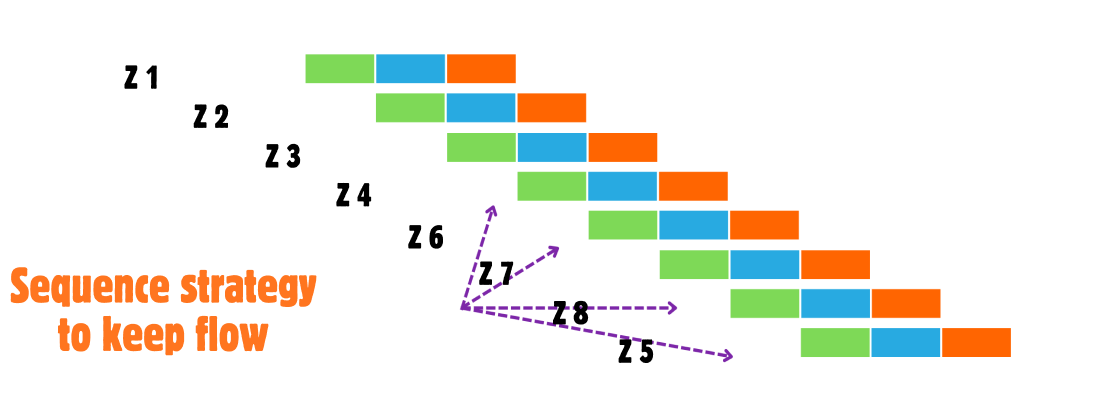
There is a structural steel constraint in zone 5.
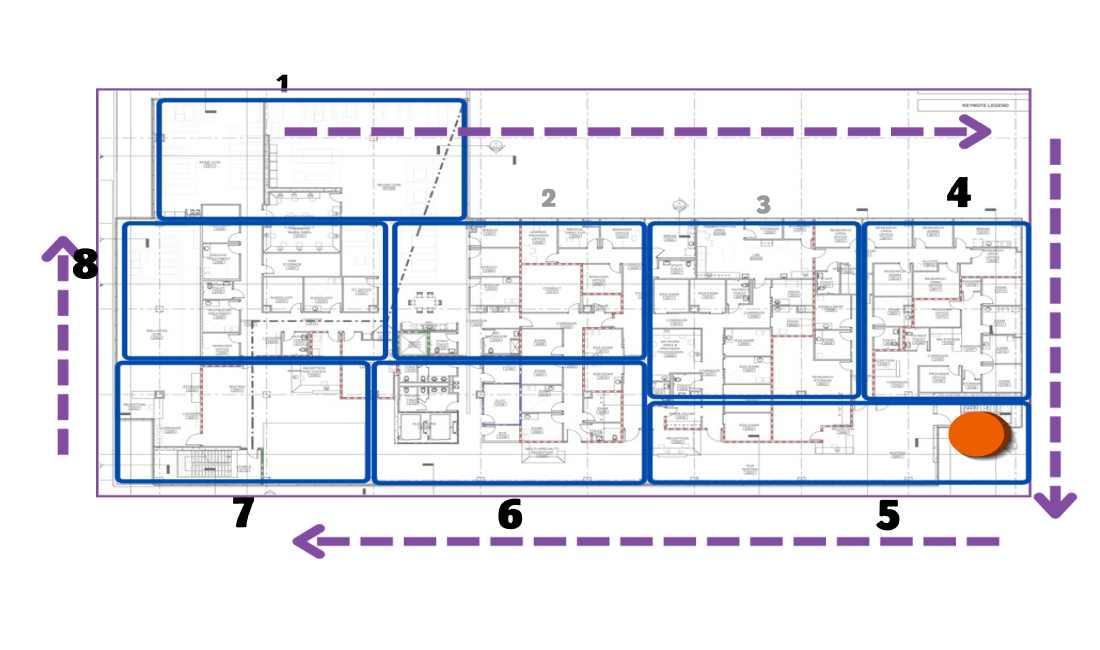
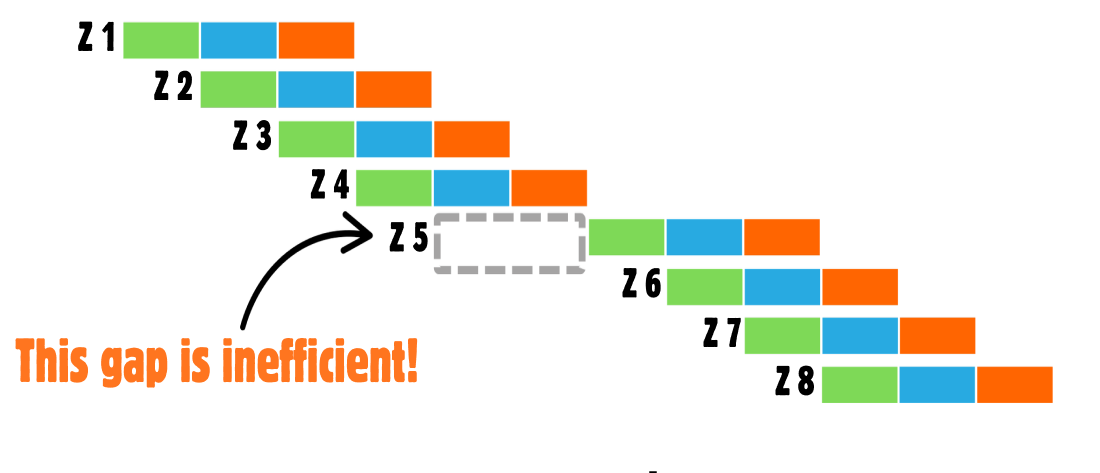
Never just go in numerical order. Strategize and find the most efficient way to move through the project.
11
ALIGN WIP AND PRE-PLAN
Sometimes, when all other options have been exhausted, the best way to accelerate is to hold steady: dig deeper with planning, do better with communication, and hold tight to stability like your life depended on it. This pulls back schedules better than pushing.
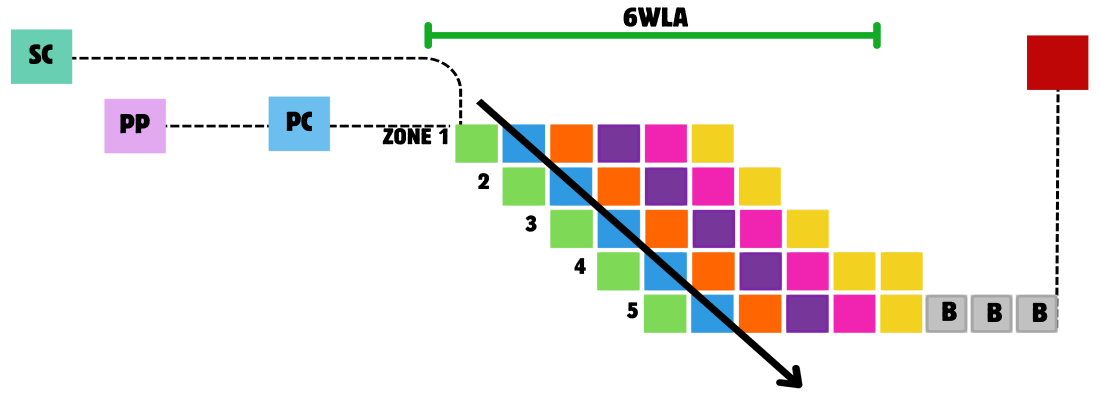
Hold the line! You must:
- Manage the supply chain by tying the start of the phase to the Procurement Log.
- Pull plan the phase three months before the start of the phase.
- Pre-construction meeting is held three weeks before the phase begins.
- Maintain the line of balance and trade flow.
- Make work ready within the six week look-ahead time frame.
12
PULL PLAN OPTIMIZATION
Sometimes we slow down all other trades to the bottleneck too fast.
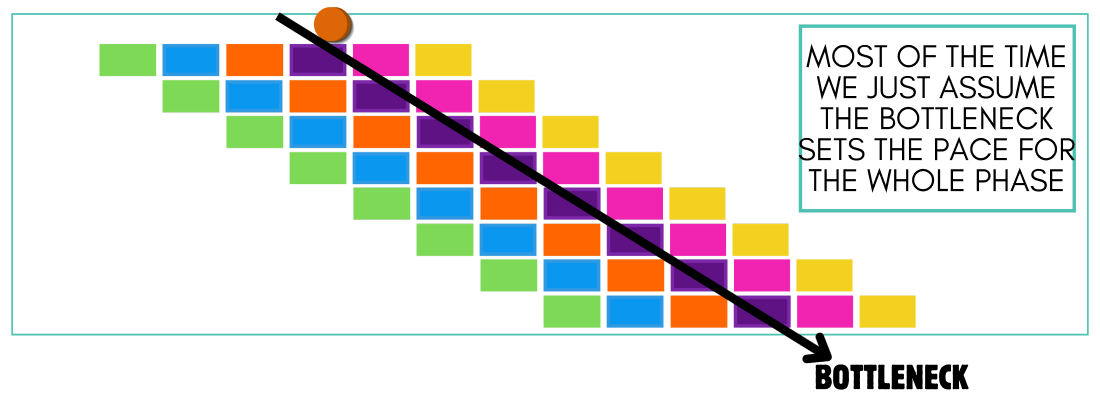
What we can do within a train of trades in a phase is identify the bottleneck, attempt to optimize it, and once it is going as fast as it can, we then decide whether to allow multi-train acceleration or level out the entire phase of work. By allowing each trade to be their own train and go their own speed, we may be able to pick up time and create buffers in the system
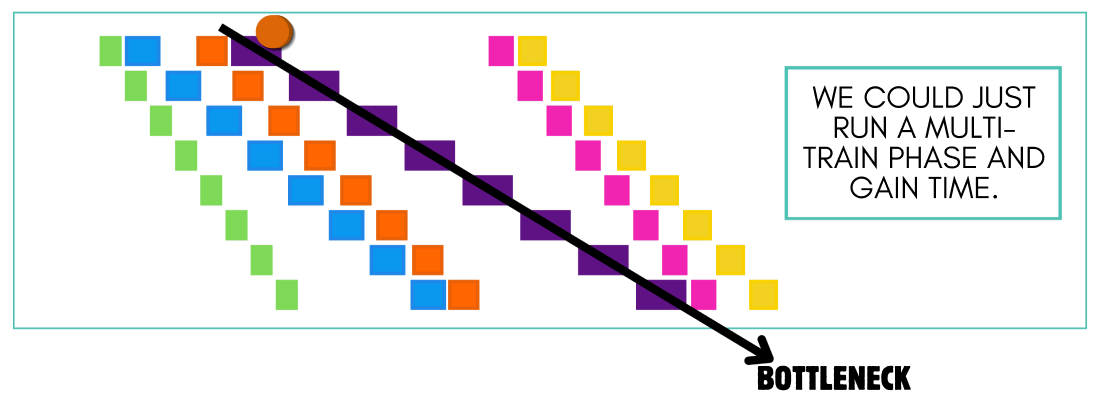
This is called the Velaga Method.