
For The Next Generation of Builders
Built For Students
The future of construction is being built by the next generation of builders. Whether you are studying construction management, engineering, or lean production — this is where your Takt journey begins. Learn the system, join a chapter, and read the stories that bring it to life.
Explore This Page
01 — Your Path Forward
Certification
A structured pathway to build real competency — not just awareness. Each level builds on the last. This is not a certificate of attendance. It is a record of demonstrated capability in the Takt Production System®.
Takt Awareness
Understand what Takt is, what the Ten Commandments require, and why CPM alone is not a production plan.
Takt Planning
Build a real Macro and Norm-level Takt plan: zone design, work packaging, buffers, line of balance, and Path of Critical Flow.
Field Application
Run Zone Control Walks, lead daily foreman huddles, manage the lookahead and weekly work plans from the Takt plan.
Takt Mastery
Train others, mentor field teams, lead phase planning sessions, and certify your own project teams in the Takt Production System®.
Full Roadmap PDF
Certification pathway guide · Free download
02 — Learn Together
Student Chapters Network
Student Chapters bring the TPI belief onto university campuses — creating peer communities where future builders can learn flow-based production together. A chapter is not a club. It is the beginning of a career built the right way.
Takt Education on Campus
Access to the full TPI curriculum — the Ten Commandments, 12 Principles, Takt 101, and the Cornerstones — brought into classroom and simulation settings by faculty and industry partners.
Industry Connections
Chapter members connect with GCs, trade partners, and owners who have already implemented Takt. Students shape the future of the work.
Simulation & Research
Run live Takt simulations and contribute findings to the IGLC academic network — the peer-reviewed home of Lean construction research.
Coming Soon — Chapter Launch Guide
How to start a Takt chapter at your university · Free resource
3a — The Foundation
Takt 101
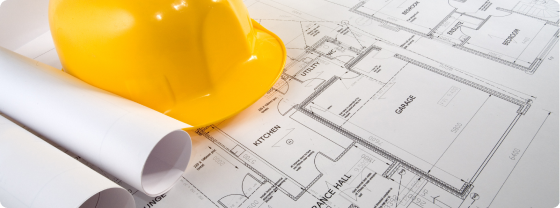
The Takt Production System engineers flow into a project on purpose —
a train of trades through zones at a steady rhythm, on a visual plan you can see on one page, governed by production laws and lean principles.
- A train of trades moving through zones at a defined rhythm
- Time on the top axis, location on the left — the formatting choice that changes everything
- Little's Law, Kingman's Formula, Brooks's Law — the production physics
- Takt Planning, Steering, Control — three modes, three different questions
- What TPS is not: not 5-day Takt, not CPM with colors
3b — Quality Standard
Takt Cornerstones
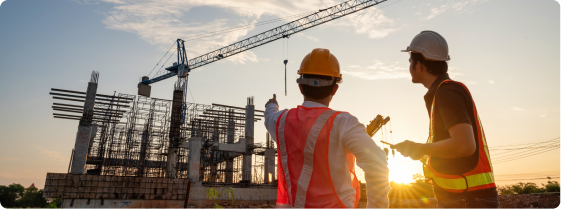
There is a lot of work being called Takt right now that isn’t. Color- coded P6 schedules. Lookahead pulls dressed up as production plans. Wall posters with no rhythm and no buffers. The Cornerstones are how you tell the difference.
- Minimum requirements: visual, rhythmic, buffered, one-process flow, reasonable duration
- Why Takt is multi-dimensional — time and space at once — and why that changes everything
- The Value Parametric (0.5–2.5): is your plan creating value without being overloaded?
- The Efficiency Parametric (0.3–3.0): are wagons and sequences balanced for flow?
- The Stability Parametric (0.5–2.0): are buffers placed where the variation actually lives?
04 — Quality Control
Takt Integrity Checklist
Before any Takt plan leaves pre-construction, it must pass an integrity check. A plan that passes all five areas is something you can build with. A plan that fails two or more should not leave pre-construction.
5 areas. All must pass.
A plan that fails two or more should not leave pre-construction.
5
Integrity Areas
Foundation Requirements
Visual, rhythmic, buffered, one-process flow, reasonable duration — the 6-point minimum every Takt plan must clear.
Structural Soundness
Solid rhythm, continuity, consistency, and an overall duration that does not require overtime or burnout to hit.
Production Laws
Little's Law, the Law of Bottlenecks, the Law of Variation, Kingman's Formula, and Brooks's Law must all be obeyed.
Functional Capabilities
Showable on one page, shows all three flows, supports just-in-time materials, enables prefabrication on a rhythm.
Schedule Health Metrics
Three parametrics — Value (0.5–2.5), Efficiency (0.3– 3.0), Stability (0.5–2.0) — plus trade buy-in and fresh-eyes review.
05 — Production Metrics
Takt KPIs
KPIs in the Takt Production System are tied directly to production laws and the way the system works. They drive flow, expose variation, and keep the train on the tracks.
Metric 01
RRA
Roadblock Removal Average
Average working days ahead of the work date that roadblocks are identified and removed. The core discipline of Takt Control.
Target: >15 working days ahead
Metric 02
NCP
Negotiations with Current Partner
Times a trade had to negotiate re-entry into a
space where their work was marked complete
but wasn’t truly finished.
Target: <20% of wagons
Metric 03
PHP
Perfect Handoff Percentage
Times a trade partner successfully completes
scope and hands off a perfectly clean space to
the next trade.
Target: >80% perfect handoffs.
Metric 04
cRBR
Capacity Remaining Buffer Rate
Average duration Takt wagons take in a
sequence divided by the available Takt time. Fully
loaded wagons guarantee falling behind.
Target: Average <90%
Metric 05
iRBR
Inventory Remaining Buffer Rate
Total work packages on site divided by the number of Takt zones that need them. Measures whether material inventory is properly buffered.
Target: 85%–95%
Metric 06
tRBR & ECC
Time Buffer Rate & Plan Clarity
tRBR should be >1.0, showing buffers consumed slower than work advances. ECC: can a 3rd-grade class understand your site plan?
tRBR >1.0 · ECC >80%
06 — Learn Together
Education Opportunities
Three ways to build real Takt competency — from a hands-on course you can take back to your project, to a live simulation that makes flow tangible, to a software tool that keeps it running every day.
3-Day Course
The TPS® Course
A hands-on, 3-day course where you learn to build real Takt plans, sequence work, and remove roadblocks — applied to your own projects, with certification on completion.
Workshop
The Simulation
An in-person, team-based workshop where you apply Takt Planning in a live, risk-free setting. The quickest way to feel how Takt creates flow before putting it to work.
Planning Software
inTakt
A web-based Takt planning tool built for construction. Create large Takt plans in minutes, track progress in real time, and manage changes from any device.
07— The Foundation
Takt Essentials
The Takt Production System engineers flow into a project on purpose — a train of trades moving through zones at a steady rhythm, on a visual plan you can see on one page, governed by production laws and lean principles.
Roughly half of construction projects finish on or under budget. Less than ten percent finish on budget and on schedule. Only about half a percent finish on budget, on schedule, and to expectations. The Takt Production System exists because there is a better way.

What TPS Delivers
Respect, Stability, and Flow — for the women and men in the field. Their time, their bodies, their planning.
Six Production Laws
Little's Law, Law of Variation, Law of Bottlenecks, Kingman's Formula, Brooks's Law, and Lucy's Law. Mathematically fixed.
Six Lean Concepts
Respect for people. Stability. One-process flow. Flowing together. See together. Continuous improvement.
What TPS Is Not
Not just for repetitive work. Not a five-day Takt time. Not locked to the work week. Not CPM with colors.
08 — Learn Together
Takt Planning Fables
The best way to understand a system is to watch it save something. These two stories do exactly that. Read them in order — they build on each other.
Fable 01 of 02
Leadership
Flow
Takt Planning
The Fable of Flow Builders
Evergreen Construction · The OneCare Hospital Project
Olivia is the youngest director at Evergreen Construction — overseeing eight projects at once. When a $150M hospital begins to unravel — safety incidents, slipping deadlines, trade partners in open conflict — she enlists a consultant to find the real cause. What they discover is not a people problem. It is a flow problem.
Fable 02 of 02
Systems Thinking
Takt Theory
Railroad Analogy
The Railroad
An Analogy for the Takt Production System®
Every element of the Takt Production System® has a railroad equivalent — and once you see it, you cannot unsee it. This fable maps the entire system — buffers, Path of Critical Flow, interdependence ties, supply depots, delay management — onto the discipline of running a timetable.
09 — Step-by-Step Guide
Building a Takt Plan
Every Takt plan is built the same way — same logic, different scale. These are the eleven foundations. Miss one and the plan works against you. Follow all of them and the project starts to run itself.
Step-by-Step Guide
11 Foundations. Same logic, different scale.
Understand the Two Plan Levels
Every Takt project runs on two plans the Macro (the promise to the owner) and the Norm (what the field actually runs on). The gap between them is your engineered buffer.
Define Programs, Projects & Phases
A program is a collection of projects in rhythm. A project is a collection of phases in rhythm. A phase is a collection of zones and work packages in rhythm. Same rules, different sizes.
Set Milestones & Phase Boundaries
Milestones are truth points — binary, visible, and non-negotiable. Every project needs a start milestone and three end milestones: Substantial, Final, and Financial Completion.
Design Your Zones
Zone by work density, not square footage. Equal area does not mean equal work. Shape zone boundaries so each zone carries roughly equal effort, then test with the formula.
Set the Takt Time
Takt time is the drumbeat — the defined duration each trade spends in a zone before moving on. Formula: (Wagons + Zones − 1) × Takt Time = Duration. Never lock it to the work week.
Apply the Full Kit Rule
Never start a task unless you have everything needed to complete it: materials on site, information in hand, tools present, scope clear, right people, and previous step genuinely done.
Build In Buffers
Buffers are not padding. They are planned, visible, intentional time reserves. End Buffer, Takt Time Buffer, Wagon Buffer, Sequence Buffer, and Supply Chain Buffer — all five required.
Identify the Path of Critical Flow
The longest path through the plan — phases, lines of balance, buffers, and ties from start to end. Visible, verifiable, and defensible. CPM's critical path is not.
Advanced Work Packaging
Prepare work so completely that a crew can pick it up and build without hunting, waiting, or guessing. CWA → Phase. CWP → Wagon. IWP → Standard Work in a Zone.
The Takt Essentials Hub
Every standard, every commandment, every resource lives in Takt Essentials. Return here throughout planning and execution — the single reference that governs the whole system.
Common Ways to Fail
Locking to 5-day Takt at Norm level. Using weekends as the drumbeat. Skipping buffers. Planning too late. Excluding builders from the plan. Treating Takt as a mechanical tool. Know these and avoid them.
10 — Takt Resources
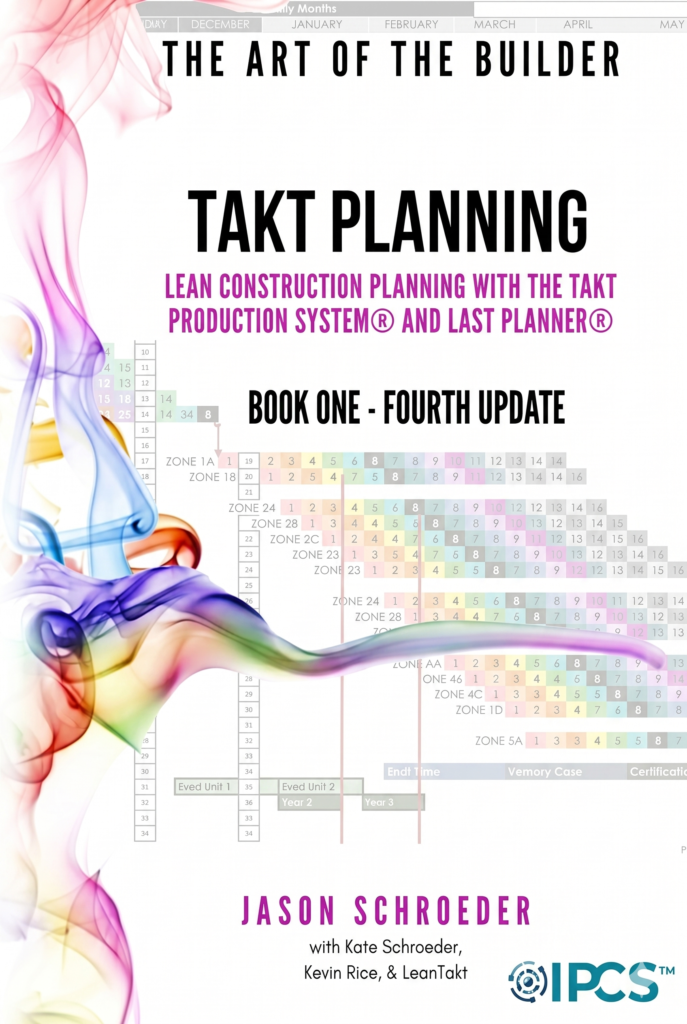
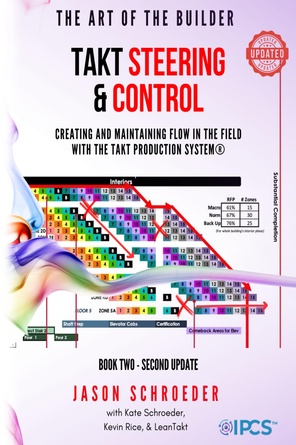
Books
11 — Blogs
Blogs
July 5, 2026
Drum-Buffer-Rope and the Train of Trades: How a Takt Plan Keeps Time
May 15, 2026