
GC &Trade Partners
General contractors and trade partners are where Takt lives or dies. Built for superintendents, foremen, PMs, and trade leaders who want to run their projects with rhythm, flow, and the system working for them.
Explore This Page
01 — Your Path Forward
Certification
A structured pathway to build real competency — not just awareness. Each level builds on the last. This is not a certificate of attendance. It is a record of demonstrated capability in the Takt Production System®.
Takt Awareness
Understand what Takt is, what the Ten Commandments require, and why CPM alone is not a production plan.
Takt Planning
Build a real Macro and Norm-level Takt plan: zone design, work packaging, buffers, line of balance, and Path of Critical Flow.
Field Application
Run Zone Control Walks, lead daily foreman huddles, manage the lookahead and weekly work plans from the Takt plan.
Takt Mastery
Train others, mentor field teams, lead phase planning sessions, and certify your own project teams in the Takt Production System®.
Full Roadmap PDF
Certification pathway guide · Free download
02 — Learn by Doing
Education Opportunities
Three ways to build real Takt competency — from a hands-on course you take back to your project, to a live simulation that makes flow tangible, to a software tool that keeps it running every day.
01
3-Day Course
The TPS® Course
Three ways to build real Takt competency — from a hands-on course you take back to your project, to a live simulation that makes flow tangible, to a software tool that keeps it running every day.
02
Workshop
The Simulation
An in-person, team-based workshop where you apply Takt Planning in a live, risk-free setting. The quickest way to feel how Takt creates flow before putting it to work on real projects.
03
3-Day Course
inTakt
A web-based Takt planning tool built for construction. Create large Takt plans in minutes, track progress in real time, and manage changes from any device.
03 — Step-by-Step Guide
Building a Takt Plan
Every Takt plan is built the same way — same logic, different scale. These are the eleven foundations. Miss one and the plan works against you. Follow all of them and the project starts to run itself.
Step-by-Step Guide
11 Foundations. Same logic, different scale.
Understand the Two Plan Levels
Every Takt project runs on two plans the Macro (the promise to the owner) and the Norm (what the field actually runs on). The gap between them is your engineered buffer.
Define Programs, Projects & Phases
A program is a collection of projects in rhythm. A project is a collection of phases in rhythm. A phase is a collection of zones and work packages in rhythm. Same rules, different sizes.
Set Milestones & Phase Boundaries
Milestones are truth points — binary, visible, and non-negotiable. Every project needs a start milestone and three end milestones: Substantial, Final, and Financial Completion.
Design Your Zones
Zone by work density, not square footage. Equal area does not mean equal work. Shape zone boundaries so each zone carries roughly equal effort, then test with the formula.
Set the Takt Time
Takt time is the drumbeat — the defined duration each trade spends in a zone before moving on. Formula: (Wagons + Zones − 1) × Takt Time = Duration. Never lock it to the work week.
Apply the Full Kit Rule
Never start a task unless you have everything needed to complete it: materials on site, information in hand, tools present, scope clear, right people, and previous step genuinely done.
Build In Buffers
Buffers are not padding. They are planned, visible, intentional time reserves. End Buffer, Takt Time Buffer, Wagon Buffer, Sequence Buffer, and Supply Chain Buffer — all five required.
Identify the Path of Critical Flow
The longest path through the plan — phases, lines of balance, buffers, and ties from start to end. Visible, verifiable, and defensible. CPM's critical path is not.
Advanced Work Packaging
Prepare work so completely that a crew can pick it up and build without hunting, waiting, or guessing. CWA → Phase. CWP → Wagon. IWP → Standard Work in a Zone.
The Takt Essentials Hub
Every standard, every commandment, every resource lives in Takt Essentials. Return here throughout planning and execution — the single reference that governs the whole system.
Common Ways to Fail
Locking to 5-day Takt at Norm level. Using weekends as the drumbeat. Skipping buffers. Planning too late. Excluding builders from the plan. Treating Takt as a mechanical tool. Know these and avoid them.
04 — The Foundation
Takt Essentials
The Takt Production System engineers flow into a project on purpose — a train of trades moving through zones at a steady rhythm, on a visual plan you can see on one page, governed by production laws and lean principles.
Roughly half of construction projects finish on or under budget. Less than ten percent finish on budget and on schedule. Only about half a percent finish on budget, on schedule, and to expectations. The Takt Production System exists because there is a better way.

What TPS Delivers
Respect, Stability, and Flow — for the women and men in the field. Their time, their bodies, their planning.
Six Production Laws
Little's Law, Law of Variation, Law of Bottlenecks, Kingman's Formula, Brooks's Law, and Lucy's Law. Mathematically fixed.
Six Lean Concepts
Respect for people. Stability. One-process flow. Flowing together. See together. Continuous improvement.
What TPS Is Not
Not just for repetitive work. Not a five-day Takt time. Not locked to the work week. Not CPM with colors.
Everything in one place. All free.
Books, masterclasses, templates, YouTube library, and all 11 research papers — the complete Takt reference library.
06 — Pre-Construction Discipline
Takt Development Steps
A disciplined sequence of decisions made before the first crew mobilizes. Neither the Macro Level nor the Norm Level is optional. Together they are what separates a project that flows from one that fights itself from week one.
20 + 21 Steps. Neither level is optional.
20
MACRO STEPS
21
NORM STEPS
Macro Level — The Promise
20-Step Pre-Construction Checklist
From studying drawings and identifying zones through the fresh-eyes review, logistics drawings, procurement log, and basis of schedule.
Study the drawings and identify all zones
Define phase boundaries and milestones
Set the Takt time for each phase
Identify interdependence ties between phases
Size the end buffer with risk analysis
Identify the Path of Critical Flow
Conduct fresh-eyes review before GMP
Norm Level — The Production Plan
21-Step Optimization Checklist
Pull-plan sequences with trades, work-package phases, add buffers, build
KPI reporting, roadblock tracking maps, and set the Takt Point of No Return.
Pull-plan sequences with trade partners
Work-package each phase zone by zone
Add phase buffers and quality triggers
Update zone maps and logistics drawings
Build meeting schedules and KPI reporting
Set up roadblock tracking maps
Set the Takt Point of No Return
Backed by Jason's Book
The full checklist is drawn from Takt Planning by Jason Schroeder — the foundational reference for anyone building a Takt plan.
07 — Field Execution
Using a Takt Plan & What It Means to Flow
Building the plan is only the beginning. The real test is whether the field can run from it — and whether flow actually shows up on the jobsite.
Field Execution
The plan is alive. The field runs it daily.
Field Guide
Using a Takt Plan
Pull-plan sequences with trades, work-package phases, add buffers, build KPI reporting, roadblock tracking maps, and set the Takt Point of No Return.
- Run daily Zone Control Walks — prepare ahead, finish behind
- Lead daily foreman huddles from the weekly work plan
- Filter the six-week lookahead from the Norm-Level Takt plan
- Identify and remove roadblocks before they reach the train
- Update the plan weekly from zone as-builts — never freeze it
- Make commitments trade-to-trade — PPC tells you how reliable the system is
Production Philosophy
What It Means to Flow
Flow is not a feeling — it is a measurable condition. A project is flowing when work moves through a designed sequence at a predictable rhythm, through stable zones, with crews finishing what they start and
handing it off cleanly.
- Workflow moves horizontally through each zone
- Trade flow moves diagonally — same speed, same distance apart
- Logistical flow keeps materials arriving just-in-time without congestion
- One-process flow: one trade finishes its zone completely before the next begins
- The line of balance is the visual proof that flow exists — on one page
- Flow beats push every time — not because it is easier, but because it is right
08 — Common Failure Modes
Takt Done Incorrectly
The Takt Production System® only begins to fail when practitioners miss one of these eight critical mistakes. Recognizing them is the first step to avoiding them — and to knowing how to fix a struggling project before it’s too late.
You stick with only a 5-day Takt throughout — even at the Norm level where it should be optimized.
You use the weekends as your Takt drumbeat and lock yourself into weeks between weekends.
You do not split, combine, and level work packages within Takt wagons — leaving hidden imbalance.
You do not include enough buffers in the phase to cover your risks — a plan with no buffer is a wish.
You don't create the plan early enough in pre-construction, missing the right project duration target.
You don't involve and align the builder — Supers and Foremen — in plan development. Crews follow plans they helped create.
You don't immediately begin managing material procurement on a log or in the Takt plan by design development phase.
PMs, Supers, & Foremen do not understand & implement Takt Steering & Control in the field.
“Takt construction must follow standards. That is why the Takt guide exists. If you are having difficulty it is likely because you are missing one of the Ten Takt Commandments or are misaligned with one of the 12 Principles.”
09 — Delay Management
Submitting A Delay
When a delay cannot be absorbed through built-in buffers and recovery strategies, it must be properly documented. The Path of Critical Flow must be verified before any delay is submitted to the owner.

Key Principle
“This path of critical flow now enables you to submit a delay to the owner if it cannot be absorbed and it changes your end date. The system gives you the evidence — the Takt plan gives you the story.”
Ensure Your Takt Schedule Is Current
Confirm Start Date, Substantial Completion Date, Phase Sequences, Phase Buffers, Line of Balance, and Interdependence Ties are all verified.
Identify the Impact in the Schedule
Show the delay in the Takt plan without trade stacking or trade burdening. The impact must reflect what actually happens to flow if nothing changes.
Ask: Can It Be Absorbed?
Explore phase buffers, swing capacity, workable backlog, separate pull plan, or swarming the delay with additional resources before escalating.
Prepare a Time Impact Analysis
If all strategies are exhausted: summary of impact, full schedule printout, window analysis, mitigation methods attempted, Critical Flow Path analysis, and requested time and cost.
10 — Production Metrics
Takt KPIs
KPIs in the Takt Production System are tied directly to production laws and the way the system works. They drive flow, expose variation, and keep the train on the tracks.
Metric 01
RRA
Roadblock Removal Average
Average working days ahead of the work date that roadblocks are identified and removed. The core discipline of Takt Control.
Target: >15 working days ahead
Metric 02
NCP
Negotiations with Current Partner
Times a trade had to negotiate re-entry into a
space where their work was marked complete
but wasn’t truly finished.
Target: <20% of wagons
Metric 03
PHP
Perfect Handoff Percentage
Times a trade partner successfully completes
scope and hands off a perfectly clean space to
the next trade.
Target: >15 working days ahead
Metric 04
cRBR
Capacity Remaining Buffer Rate
Average duration Takt wagons take in a
sequence divided by the available Takt time. Fully
loaded wagons guarantee falling behind.
Target: Average <90%
Metric 05
iRBR
Inventory Remaining Buffer Rate
Total work packages on site divided by the number of Takt zones that need them. Measures whether material inventory is properly buffered.
Target: 85%–95%
Metric 06
tRBR & ECC
Time Buffer Rate & Plan Clarity
tRBR should be >1.0, showing buffers consumed slower than work advances. ECC: can a 3rd-grade class understand your site plan?
tRBR >1.0 · ECC >80%
11 — Quality Control
Takt Integrity Checklist
Before any Takt plan leaves pre-construction, it must pass an integrity check. A plan that passes all five areas is something you can build with. A plan that fails two or more should not leave pre-construction.
5 areas. All must pass.
A plan that fails two or more should not leave pre-construction.
5
Integrity Areas
Foundation Requirements
Visual, rhythmic, buffered, one-process flow, reasonable duration — the 6-point minimum every Takt plan must clear.
Structural Soundness
Solid rhythm, continuity, consistency, and an overall duration that does not require overtime or burnout to hit.
Production Laws
Little's Law, the Law of Bottlenecks, the Law of Variation, Kingman's Formula, and Brooks's Law must all be obeyed.
Functional Capabilities
Showable on one page, shows all three flows, supports just-in-time materials, enables prefabrication on a rhythm.
Schedule Health Metrics
Three parametrics — Value (0.5–2.5), Efficiency (0.3– 3.0), Stability (0.5–2.0) — plus trade buy-in and fresh-eyes review.
12a — The Foundation
Takt 101
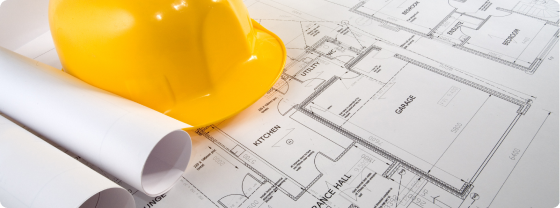
The Takt Production System engineers flow into a project on purpose — a train of trades moving through zones at a steady rhythm, on a visual plan you can see on one page, governed by production laws and lean principles. It is not a schedule. It is not a Gantt chart with prettier colors. It is a way of building.
- The core idea: a train of trades moving through zones at a defined rhythm
- Time on the top axis, location on the left — the formatting choice that changes everything
- Little's Law, Kingman's Formula, Brooks's Law, Lucy's Law — the production physics
- Takt Planning, Takt Steering, Takt Control — three modes, three different questions
- What TPS is not: not just repetitive work, not 5-day Takt, not CPM with colors
12b — Quality Standard
Takt Cornerstones

There is a lot of work being called Takt right now that isn’t. Colour-coded P6 schedules. Lookahead pulls dressed up as production
plans. Wall posters with no rhythm and no buffers. The Cornerstones
are how you tell the difference.
- Minimum requirements: visual, rhythmic, buffered, one-process flow, reasonable duration
- Why Takt is multi-dimensional — time and space at once — and why that changes everything
- The Value Parametric (0.5–2.5): is your plan creating value without being overloaded?
- The Efficiency Parametric (0.3–3.0): are wagons and sequences balanced for flow?
- The Stability Parametric (0.5–2.0): are buffers placed where the variation actually lives?
13 —Takt Resources
Blogs
July 5, 2026
Drum-Buffer-Rope and the Train of Trades: How a Takt Plan Keeps Time
May 15, 2026